Chicago's Bike 2010 Plan: From Bike 2000 to Bike 2015
The Bike 2010 plan behind the Millennium Park bike station: the Bike 2000 plan before it, the Bike 2015 plan after it, and what Chicago set out to build.
"Bike 2010 Plan" is the label for the Chicago planning discussions in which the Millennium Park bike station was developed. The City's published documents are the Bike 2000 Plan, prepared in 1992, and the Bike 2015 Plan, approved September 21, 2005. Bike 2015 set a 500-mile bikeway goal.1,2,4
- At a glance
- Earlier plan
- Bike 2000, prepared 19922
- Plan approved
- Bike 2015, September 21, 20052
- Bikeway goal
- 500 miles1
- Ridership goal
- 5 percent of trips under 5 miles1
- Injury goal
- 50 percent fewer1
- Strategies
- 1501
On this page
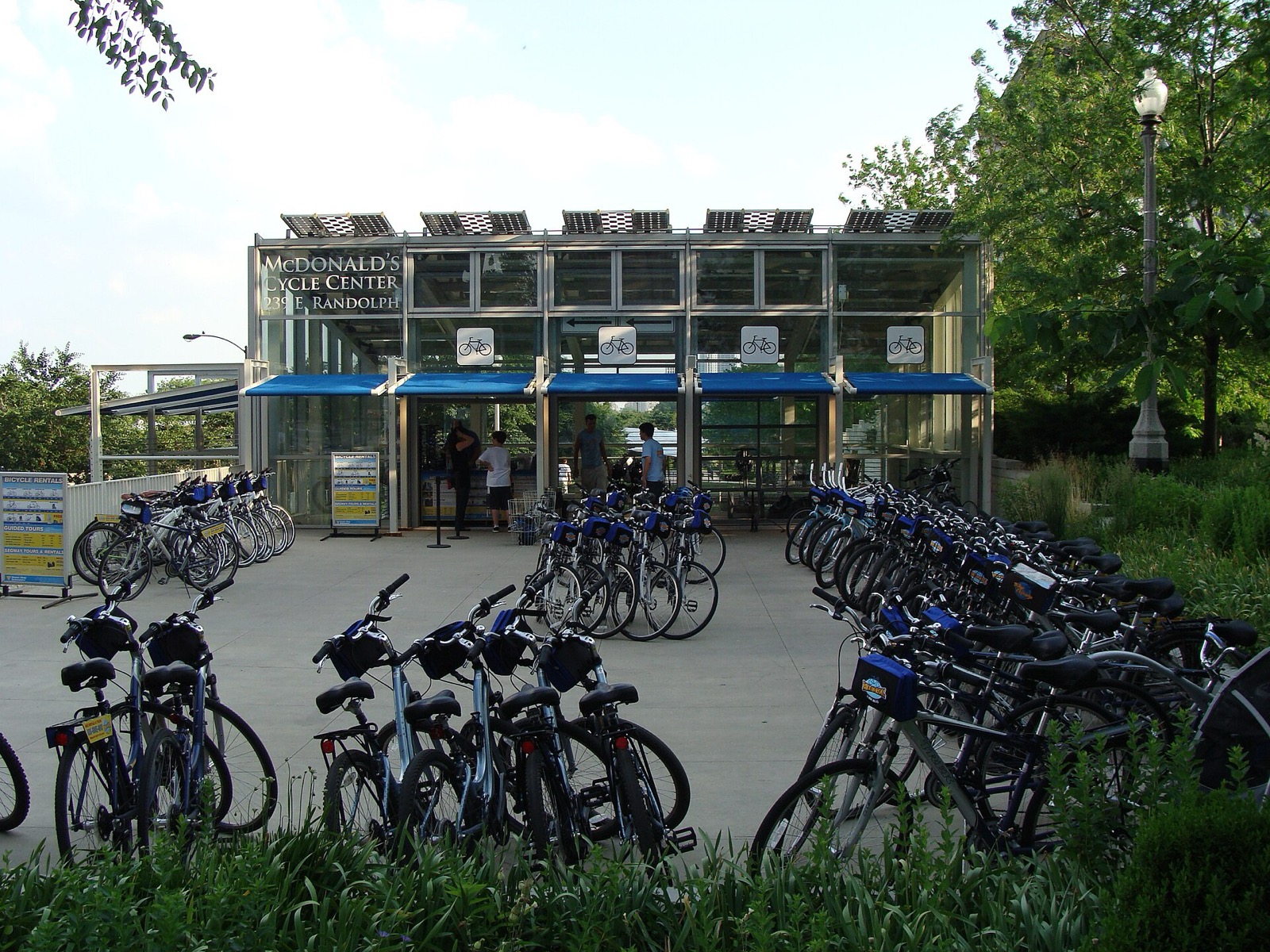
Chicago did not drift into bike-friendliness. It wrote plans, measured them and published goals. This page traces that paper trail, from the first plan through the talks that produced the Millennium Park bike station to the plan that followed.
The name and the documents
“Bike 2010 Plan” is the label attached to the discussions in which the Millennium Park bike station was developed, an initiative of Mayor Richard M. Daley to promote Chicago as the most bicycle-friendly city in the United States.4 The City’s published documents carry two other names. The Bike 2000 Plan came first. The Bike 2015 Plan followed it.2
The station history tells the building’s own story. The plan tells you why it was built.
Bike 2000: the 1992 foundation
The Mayor’s Bicycle Advisory Council prepared the Bike 2000 Plan in 1992, with 31 recommendations to encourage bicycling in Chicago.2 The plan records significant progress on every recommendation.2
The results were concrete:
- A network of 100 miles of on-street bike lanes and 50 miles of off-street trails.2
- 10,000 bike racks, more than any city in the United States.2
- Bikes permitted on CTA trains, and racks on a fleet of 2,000 buses.2
In 2001, Bicycling Magazine selected Chicago as the best big city, with over one million people, for bicycling in North America.2 The stated goal was “to make the City of Chicago the most bicycle-friendly city in the United States.”2
Bike 2015: the plan that followed
Preparation began in 2002, when the Chicago Department of Transportation retained the Chicagoland Bicycle Federation to help develop the plan.2 Three public meetings drew 235 people.2 The Mayor’s Bicycle Advisory Council approved the plan on September 21, 2005.2
The City described it as its vision to make bicycling an integral part of daily life in Chicago, with recommendations for the next ten years.1 It set two goals:
- Five percent of all trips under five miles made by bicycle.1
- Bicycle injuries cut by 50 percent from current levels.1
The plan reasoned from geography. Almost 60 percent of all trips made by Chicago residents are three miles or less, a distance suited to a bicycle.2
Eight chapters, 150 strategies
The plan has eight chapters, each with a specific goal.1 One hundred fifty strategies carry them out.1 The chapters cover the bikeway network, bicycle-friendly streets, bike parking, transit, education, marketing and health promotion, law enforcement and crash analysis, and bicycle messengers.1
| Target in the plan | Figure |
|---|---|
| Bikeway network | 500 miles, a bikeway within half a mile of every resident1 |
| New bike racks | 5,0001 |
| New long-term parking spaces | 1,0001 |
| Growth in bike-transit trips | 10 percent per year1 |
What made it work
The City tied delivery to four conditions.2 Key agencies had to commit to the strategies. Funding had to be significant and sustained, particularly through federal transportation grants. Political support had to continue. And the plan needed a strong partnership with Chicago’s bicycling community.2
The plan credited the City’s agencies with incorporating bicycling into their mandates and programs.2 It also credited Chicago’s non-profit bicycle advocacy group, the Active Transportation Alliance, for professional services.2
The second station that never arrived
The plan called the Millennium Park station very successful, encouraging thousands of bicycle trips annually.3 Its answer was a sequel: another bicycle station at a popular train station, such as Ogilvie Transportation Center.3
The proposed services: secure parking, showers or changing facilities, lockers, rental and repair.3 The schedule ran feasibility study and business plan by 2007, design by 2009 and construction by 2010.3 The plan listed the Berkeley, Long Beach and Seattle bikestations as best practices.3 See bike stations in other cities for how that model spread.
The Millennium Park building opened on July 19, 2004.4 Its design began in August 2003.4
The plan today
The Chicago Department of Transportation now publishes a Chicago Cycling Strategy. Its 2023 update reports a network of over 420 miles of on-street bikeways.5 It also sets a target of 70% of Chicagoans living within 1/2 mile of a low-stress bikeway.5
Bike 2015 had proposed a 500-mile network.1
For the whole story of the station this plan produced, start at the Station hub. For why the city rewards riders, read why ride a bike in Chicago.
Read next
McDonald's Cycle Center History: Chicago's Millennium Park Bike Station
How Chicago built the Millennium Park bike station in 2004, named it for McDonald's in 2006, handed it to Shift Transit in 2021 and closed it in 2022.
stationBike Stations in Other US Cities: Where Chicago's 2004 Station Fit
The bike station model, from Long Beach in 1996 to Chicago's 2004 Millennium Park station: who ran them, what they cost, and how secure parking works now.
stationWhy Ride a Bike in Chicago: The Five Reasons the Bike Station Gave in 2013, Updated
The Millennium Park bike station gave five reasons to ride in Chicago in 2013. Here is each one, checked against today's city, health and cost figures.
Questions people ask
What was Chicago's Bike 2010 Plan?
It was the name attached to the planning discussions, an initiative of Mayor Richard Daley, in which the Millennium Park bike station was developed. The City's published plan from that period is the Bike 2015 Plan.4,2
What replaced the Bike 2010 Plan?
The Bike 2015 Plan, which the Mayor's Bicycle Advisory Council approved on September 21, 2005. It carries eight chapters and 150 strategies.2,1
What was the Bike 2000 Plan?
The Mayor's Bicycle Advisory Council prepared it in 1992. It made 31 recommendations, with significant progress on every one.2
Did the Bike 2015 Plan call for a second bike station?
Yes. It proposed another bicycle station at a popular train station such as Ogilvie Transportation Center, with construction by 2010.3
What are Chicago's bike plans today?
The Chicago Department of Transportation now publishes a Chicago Cycling Strategy. Its 2023 update reports a network of over 420 miles of on-street bikeways.5
Sources
- Bike 2015 Plan: Executive SummaryGOV
City of Chicago, Chicago Bicycle Program (via Wayback) · web.archive.org · checked 2026-10-19 - Bike 2015 Plan: IntroductionGOV
City of Chicago, Chicago Bicycle Program (via Wayback) · web.archive.org · checked 2026-10-19 - Bike 2015 Plan (full PDF)GOV
City of Chicago, Chicago Bicycle Program (via Wayback) · web.archive.org · checked 2026-10-19 - McDonald's Cycle CenterREFERENCE
Wikipedia · en.wikipedia.org · checked 2026-10-19 - Chicago Cycling Strategy (2023 update)GOV
Chicago Department of Transportation · chicago.gov · checked 2026-10-19
Photo credits (1)
- Torsodog / Wikimedia Commons · CC BY-SA 3.0 · source

Laws are quoted from Illinois statute and the Chicago Municipal Code; prices from each operator on the date shown. Editorial policy · Corrections.