Winter Cycling in Chicago: What to Wear, Ride and Expect
How to bike through a Chicago winter: the three-layer system, fenders and lights, who plows the protected bike lanes, and the 2027 Winter Bike Swap.
You can bike in Chicago all winter with three layers, fenders, and lights. Dress to feel a little cold at the door1. Expect uneven plowing: the City clears roughly 70 miles of protected lanes3, and snow can linger for days after a storm3. Slow down, and keep an L station as your backup2.
- At a glance
- Clothing
- Three layers; avoid cotton1
- Tires
- Regular tires work unless snow tops 3 inches1
- Lights
- White front lamp visible from 500 feet4
- Protected lanes
- About 70 miles, plowed by CDOT3
- Winter Bike Swap
- February 14, 2027, St. Charles, IL5
Prices from Chicago Winter Bike Swap, checked 2026-10-19.
On this page
Chicago riders do not stop in January. Winter riding is easier than it looks, and just about any old bike will do if it has fenders and lights2. The work is in the preparation. For the wider picture, start with the commuting guide.
Dress in three layers
Layering is the whole system. Active Transportation Alliance recommends three layers1:
- Base: a thin polyester or wool fabric that wicks sweat. Avoid cotton1.
- Middle: loose merino wool, fleece or synthetic fibers1.
- Outer: a wind-resistant, water-resistant jacket, ideally with zippers and vents1.
Cover the extremities. Wear a beanie or cap thin enough to fit under your helmet1. Choose waterproof boots a half to full size larger than normal, so thick socks fit and toes move1. Lobster gloves, or mittens over glove liners, keep your hands warm and still let you brake and shift1.
Start slightly cold. If you feel warm at the door, you are overdressed. Sweat can freeze when you stop pedaling and raise the risk of frostbite1.
Set up the bike
Fenders come first, since they keep slush off you and your bike1. Regular tires work well unless heavy snow exceeds 3 inches1. Wipe the bike down regularly and lubricate all moving parts except the brake pads1.
Lights are not optional. At night a bicycle needs a white front lamp visible from at least 500 feet. A steady or flashing red light visible from 500 feet may be used in addition to or instead of the red reflector4. See Illinois bike light law.
Divvy is a winter option. Its bikes have built-in fenders, chain guards, lights and baskets, and you skip cleaning the chain2. Compare plans on Divvy pricing.
Know who clears the lanes
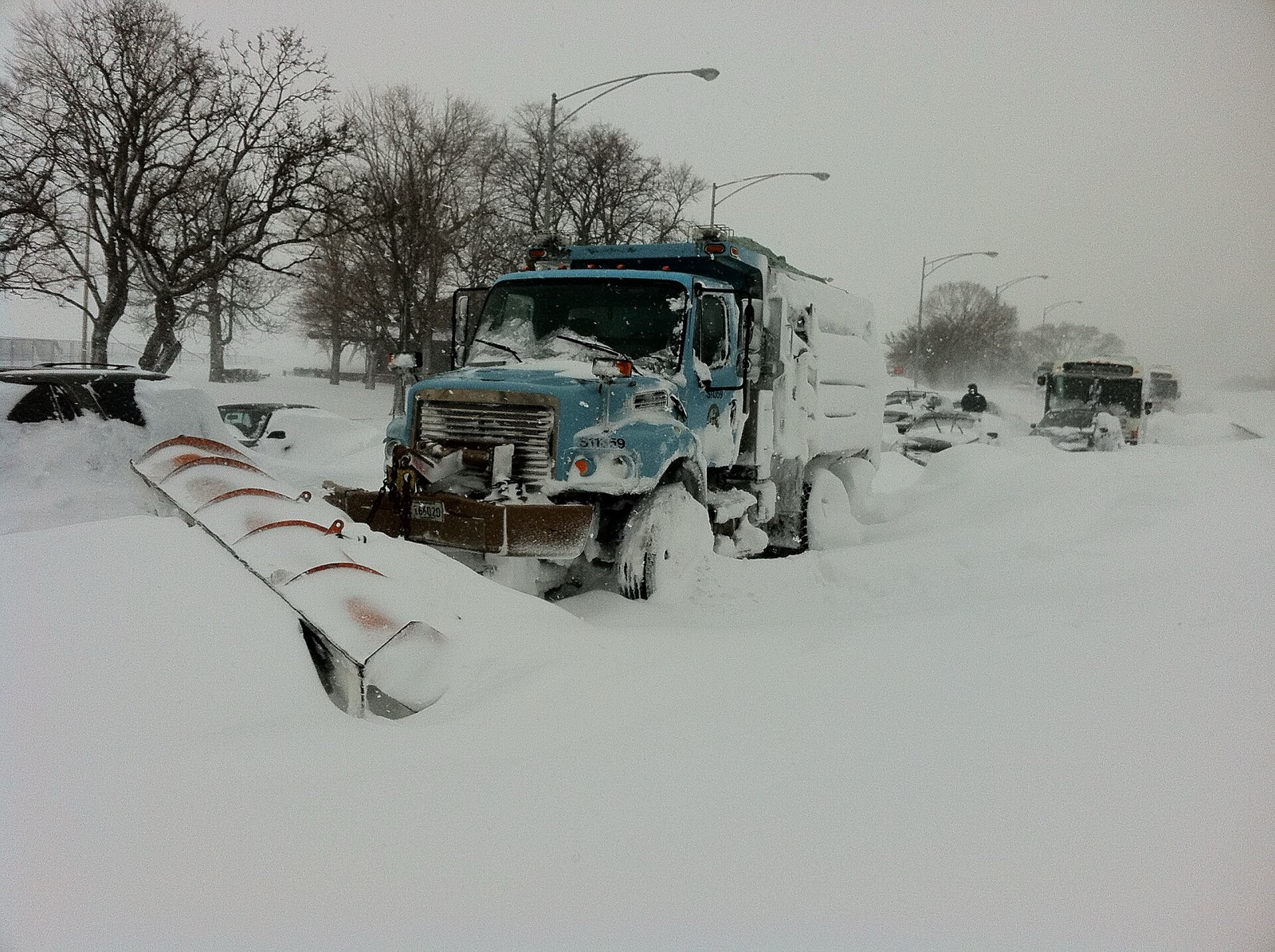
Plowing is split. CDOT manages snow removal on roughly 70 miles of protected bike lanes. The Department of Streets and Sanitation plows mixed-traffic lanes and paint-only bike lanes3. After the early-December 2025 storm, which dropped eight to ten inches over a weekend, Streetsblog photographed protected lanes still snowbound days later, and one rider said snow forced him further into the street3.
Report a lane that needs attention through 3113. Choose your route with that in mind: main streets clear first but carry more traffic, while side streets hold more slush and snow but stay calmer1.
Ride slowly on ice
On ice, hard-packed snow or slick metal, stay loose, pump the brakes, keep your weight back and go slow1. If you start to slide, do not try to correct or brake. Stop pedaling and hold steady1. There is no shame in walking your bike when you need to1.
In very low temperatures, check the forecast, know your limits and keep an L station in mind as a backup2.
Buy gear at the Winter Bike Swap
The Chicago Winter Bike Swap returns Sunday, February 14, 2027, in St. Charles, Illinois5. Adult admission is $8, kids 12 and under are free, and parking is free5. It is a cheap place to find a used commuter and winter gear before the worst of the season.
For year-round planning, see the Chicago bike lanes guide.
Read next
Bike Commuting in Chicago: A Beginner's Guide
How to start commuting by bike in Chicago: the network, where to ride, the lighting rule, a pre-ride check, and how to combine the bike with CTA.
lawsIllinois Bike Light Law: What You Need After Dark
What Illinois and Chicago require on a bicycle at night: the 500-foot white front lamp, the red rear reflector or light, brakes, and where the fines come from.
commutingChicago Bike Lanes: Network Map, Lane Types and How to Ride Them
Chicago has 501 miles of bikeways, 69 of them protected. What each lane type means, where the network is growing, and how to ride it.
Questions people ask
Is it too cold to bike in Chicago in winter?
Not with the right gear. Streetsblog Chicago counted at least 60 riders in protected lanes on Milwaukee Avenue in one hour on December 10, 2024, in 32F weather2. In very low temperatures, check the forecast, know your limits and keep an L station in mind as a backup2.
What should I wear to bike in Chicago winter?
Use three layers: a thin base that wicks sweat, a warming middle layer, and a wind-resistant, water-resistant shell. Avoid cotton1. Wear boots a half to full size larger and a cap thin enough to fit under your helmet1.
Do I need special tires for snow?
No. Regular tires work well in winter, except in heavy snow of more than 3 inches1. Fenders matter more: they keep slush off you and your bike1.
Sources
- Winter biking tips to keep you pedaling in the cold and snowNONPROFIT
Active Transportation Alliance · activetransportation.org · checked 2026-10-19 - Biking in Chicago during the dead of winterPRESS
Streetsblog Chicago · chi.streetsblog.org · checked 2026-10-19 - We asked CDOT what's on tap for properly maintaining Chicago's protected bike lanes after snowstormsPRESS
Streetsblog Chicago · chi.streetsblog.org · checked 2026-10-19 - 625 ILCS 5/11-1507GOV
Illinois General Assembly (via Wayback) · ilga.gov · checked 2026-10-19 - Chicago Winter Bike SwapOPERATOR
Chicago Winter Bike Swap · chicagowinterbikeswap.com · checked 2026-10-19
Photo credits (1)
- Victorgrigas / Wikimedia Commons · CC0 · source

Laws are quoted from Illinois statute and the Chicago Municipal Code; prices from each operator on the date shown. Editorial policy · Corrections.