E-Bike Commuting in Chicago: Rules, Classes and Where to Ride
Illinois classes e-bikes by speed, bars them from sidewalks, and changes the rules on January 1, 2027. Where you may ride and how to take one on transit.
Low-speed e-bikes have a motor under 750 watts and fall into three classes: Class 1 and 2 stop assisting at 20 mph, Class 3 at 28 mph. They follow bicycle rules, may use roads and bike lanes, and may not use sidewalks. Chicago bars Class 3 riders under 16. A new state law starts January 1, 2027.1,2,3,5
- At a glance
- Motor limit
- Under 750 watts1
- Class 1 and 2 assist cutoff
- 20 mph1
- Class 3 assist cutoff
- 28 mph1
- Class 3 minimum age in Chicago
- 163
- Sidewalks
- Not allowed2
- New state law effective
- January 1, 20275
On this page
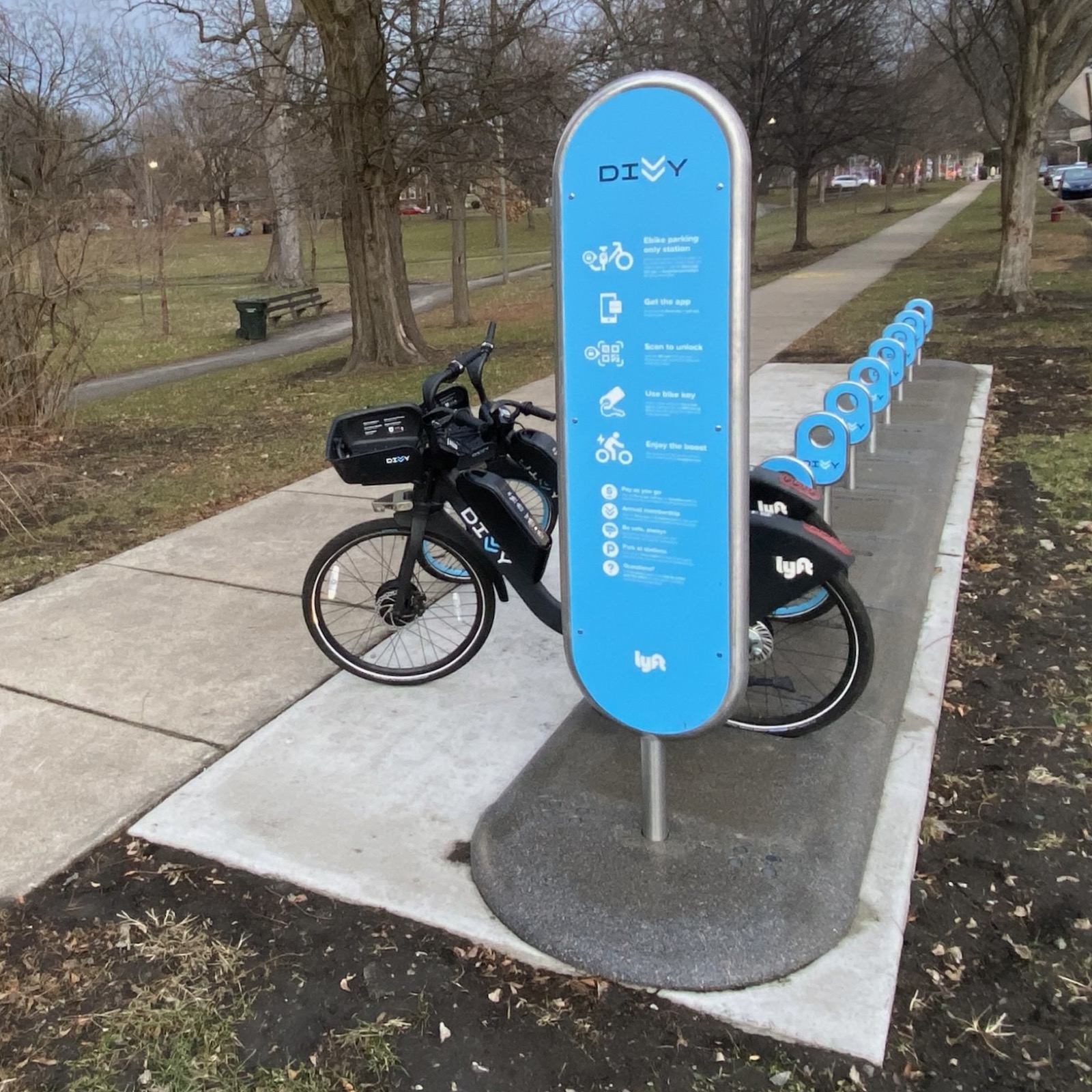
Illinois law treats a low-speed e-bike as a bicycle with limits. The class decides where you may ride, and a new state law will redraw some of those lines in 2027.5
The three classes
Illinois defines a low-speed e-bike as a bicycle with fully operable pedals and an electric motor of less than 750 watts, in one of three classes.1
| Class | How the motor works | Assist stops at |
|---|---|---|
| Class 1 | Assists only while pedaling | 20 mph1 |
| Class 2 | Motor can propel the bike on its own | 20 mph1 |
| Class 3 | Assists only while pedaling | 28 mph1 |
Each class has a motor cutoff. Chicago’s code requires a Class 1 or Class 3 motor to disengage when the rider stops pedaling.3 Illinois requires a Class 2 motor to disengage when the brakes are applied.2
What to check on the bike
Illinois requires a label on the bicycle showing its class number, top assisted speed and motor wattage.2 Read it before you buy. A Class 3 bike must carry a speedometer that displays speed in miles per hour.2
Where you may ride
State law treats low-speed e-bikes like bicycles: the provisions that apply to bicycles also apply to them.2 A rider may use any highway, street or roadway authorized for bicycles, bike lanes included.2
Bicycle paths are open unless the local authority prohibits e-bikes or a specific class.2 The Park District is deciding what that means on its paths. See the Lakefront section below.
Sidewalks are closed. A person may not operate a low-speed e-bike on a sidewalk.2 Chicago repeats the ban for Class 3: no one may ride one on any sidewalk.4
Age limits
In Chicago, only a person 16 or older may operate a Class 3 e-bike.3 The 2027 state law sets 15 for Class 1 and Class 2, and lets riders under 16 travel as passengers on a Class 3 e-bike designed for passengers.5
The 2027 law
Public Act 104-0854 takes effect January 1, 2027.5 Three changes matter to commuters:
- An electric bicycle that is not low-speed is a motor driven cycle.5
- Local governments may not otherwise regulate low-speed e-bikes, except as the Act allows.5
- Park districts, forest preserve districts and transit districts may regulate low-speed e-bikes on bicycle paths under their jurisdiction.5
WTTW reports that the law standardizes what had been a patchwork of municipal rules. It also separates low-speed devices from vehicles closer to motorcycles.6
Vehicles capable of more than 28 mph will be barred from bike lanes and bike paths. Riders of those machines must be 16, with a driver’s license, registration and insurance.6 WTTW reports the law permits lower-speed e-bikes and e-scooters at speeds up to 28 mph.7
The Lakefront Trail and park paths
As of WTTW’s September 30 report, the Park District is still setting its own limits. It is holding town halls, and attendees favored tougher limits than the state’s, especially on speed.7 Forest preserve districts and other municipalities have capped speeds at 15 to 20 mph.7 Shared e-scooters are already restricted on the lakefront path and the 606.7
The district’s timeline targets proposed changes at its board’s November meeting, a 45-day comment period, and potential approval in January.7 Check posted signs before you ride a path, and read the Lakefront Trail guide for the route itself.
E-bikes on transit
CTA. Folding e-bikes are always allowed on the L and on buses, if folded.8 Other bike rules are in bikes on CTA trains.
Metra. Riders must be able to carry the bike on and off the train without the motor’s help.9 Onboard power outlets may not be used to charge e-bikes.9 Metra amended its bike policy to require this.10 See bikes on Metra.
Try one before buying
Divvy e-bikes are pedal-assist with a 20 mph maximum.11 A single ride costs a $1 unlock plus $0.44 a minute.12 Divvy e-bikes can start and end trips at any Divvy station or at any legal bike parking space, with extra fees.11 See Divvy e-bikes for the full pricing.
Lock it well
E-bikes are a target. In a Bike Index survey, 12% of stolen bikes were e-bikes.13 Bike locks in Chicago explains how to lock one.
For routes, parking and the rest of the commute, start at the commuting hub and the Chicago bike commuting guide.
Read next
Bike Commuting in Chicago: A Beginner's Guide
How to start commuting by bike in Chicago: the network, where to ride, the lighting rule, a pre-ride check, and how to combine the bike with CTA.
commutingBike Locks for Chicago: What to Buy and How to Lock
Chicago needs more than one cheap cable. Which lock types hold up, the two-lock minimum for big cities, and where to lock a bike.
commutingBikes on CTA Trains: Hours, Limits and Etiquette
When you can bring a bike on the CTA L, the two-bike car limit, the rush-hour blackout, which gates to use, and what stays off the train.
Questions people ask
Are e-bikes street legal in Chicago?
Yes, low-speed e-bikes may use any road or street open to bicycles, bike lanes included. They are bicycles under Illinois law, with a motor under 750 watts. They may not be ridden on sidewalks.1,2
How fast can an e-bike go in Illinois?
Class 1 and Class 2 motors stop assisting at 20 mph. Class 3 stops at 28 mph. A Class 1 or 3 motor cuts out when the rider stops pedaling, and a Class 2 motor cuts out when the brakes are applied.1,2,3
Can I take an e-bike on the CTA or Metra?
On the CTA, folding e-bikes are always allowed. Metra allows bikes and e-bikes, but riders must carry them on and off the train without motor power, and may not charge them from onboard outlets.8,9,10
Sources
- 625 ILCS 5/1-140.10, Low-speed electric bicycleGOV
Illinois General Assembly · ilga.gov · checked 2026-10-19 - 625 ILCS 5/11-1517, Low-speed electric bicyclesGOV
Illinois General Assembly · ilga.gov · checked 2026-10-19 - Chicago Municipal Code 9-52-120, Low-speed electric bicyclesGOV
City of Chicago · codelibrary.amlegal.com · checked 2026-10-19 - Chicago Municipal Code 9-52-020, Riding bicycles on sidewalks and certain roadwaysGOV
City of Chicago · codelibrary.amlegal.com · checked 2026-10-19 - Public Act 104-0854 (SB 3484)GOV
Illinois General Assembly · ilga.gov · checked 2026-10-19 - Chicago Park District To Hold Town Halls on E-Bike and E-Scooter Use on Paths and TrailsPRESS
WTTW News (via Wayback) · news.wttw.com · checked 2026-10-19 - Speed and Enforcement Are Top Issues Raised at Chicago Park District's First Town Hall on Motorized DevicesPRESS
WTTW News (via Wayback) · news.wttw.com · checked 2026-10-19 - Bike & RideGOV
Chicago Transit Authority · transitchicago.com · checked 2026-10-19 - What to Expect OnboardGOV
Metra (via Wayback) · metra.com · checked 2026-10-19 - Metra amends bike policy to address safety concernsGOV
Metra · metra.com · checked 2026-10-19 - DivvyGOV
Chicago Department of Transportation · chicago.gov · checked 2026-10-19 - Plans & PricingOPERATOR
Divvy · divvybikes.com · checked 2026-10-19 - 2025 Bicycle Theft Stats: What You Need to Know to Protect Your BikeNONPROFIT
Bike Index · bikeindex.org · checked 2026-10-19
Photo credits (1)
- Raed Mansour / Wikimedia Commons · CC BY 2.0 · source

Laws are quoted from Illinois statute and the Chicago Municipal Code; prices from each operator on the date shown. Editorial policy · Corrections.