Bike Crash in Chicago: What to Do and Who to Call
Steps after a bicycle crash in Chicago from official sources: 911 versus 311, what to collect, driver duties under Illinois law, and getting the police report.
Call 911 and ask for police, and for an ambulance if anyone is hurt. Ask the driver to stay until officers arrive. Collect the driver's name, license and plate numbers, insurance details and witness contacts. Chicago police crash reports cost $6.00, and when no officer is present, an Illinois driver must notify police of any crash with an injury.1,2,3
- At a glance
- Emergency
- 911, and ask for an ambulance if injured1
- Non-emergency police line
- 3-1-1, open 24/74
- Crash report fee
- $6.00 per report, $1.50 amended2
- Records office
- 3510 S. Michigan Ave., Mon–Fri 8:00 a.m.–1:30 p.m.2
- Online driver info window
- Crashes reported in the past 2 weeks2
- Driver notice duty
- Any crash with injury or death, 625 ILCS 5/11-4073
On this page
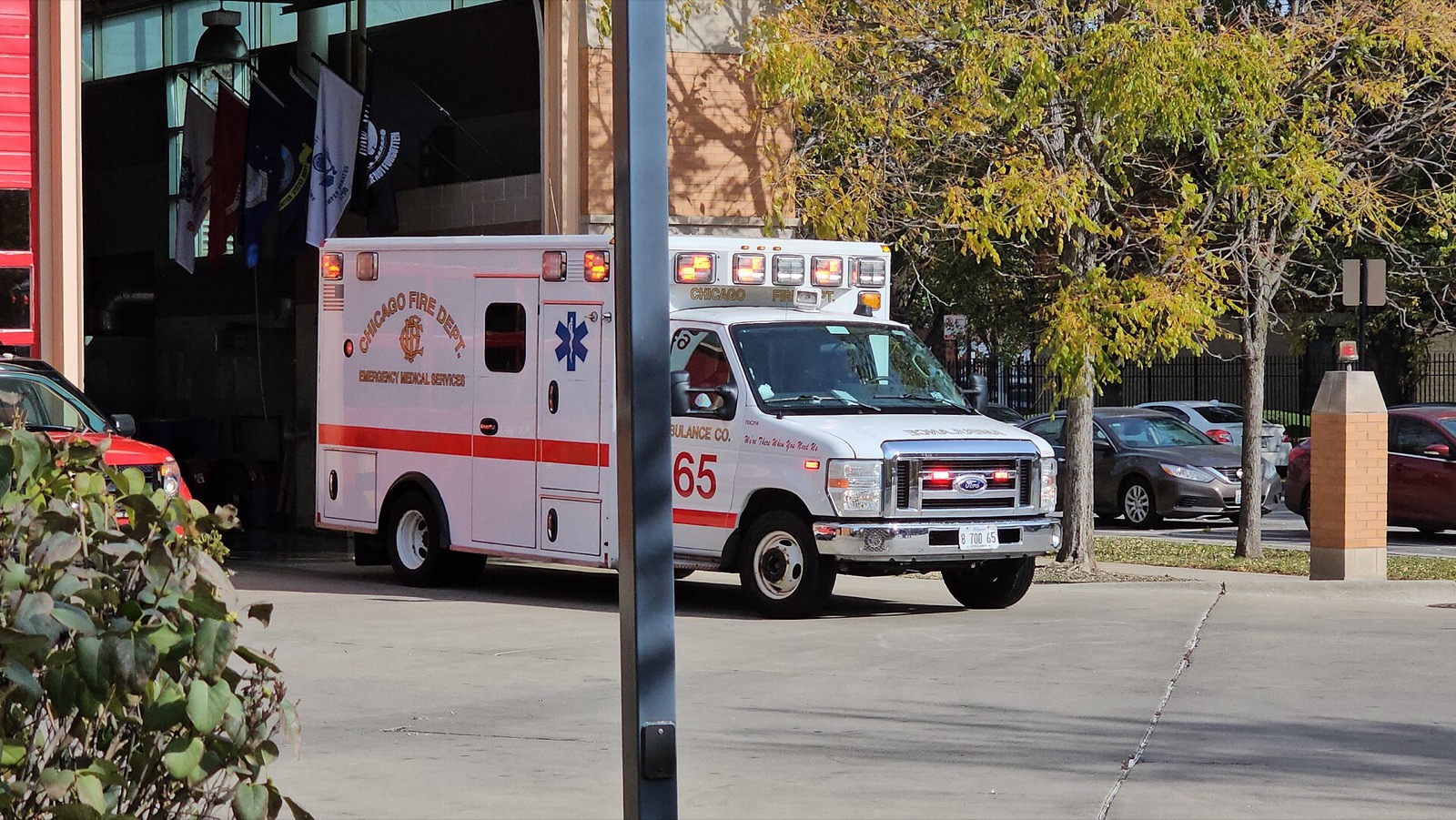
A crash is the worst time to improvise. The state and the city publish short instructions for it. This page puts them in order: what to do at the scene, which number to call, what Illinois law requires of the driver, and how to get the police report afterward. It covers procedure only. It is not legal advice and it does not estimate compensation.
At the scene
The Illinois Secretary of State’s bicycle booklet gives a short checklist for a crash.1 In order:
- Call, or ask someone to call, 911 and ask for the police. Do not hesitate to ask for an ambulance if you are injured.1
- Ask the motorist to provide ID and to stay at the scene until the police arrive.1
- Obtain the motorist’s name, phone number, address, driver’s license number and license plate number.1
- Obtain names and phone numbers of any witnesses, the more the better.1
- Obtain the name of the car owner’s insurance company and the policy number. If the driver does not own the car, get the insurance details for the vehicle and the driver.1
The booklet adds one line for every rider: always carry identification in case of a crash.1
911 or 3-1-1
Chicago Police separate emergencies from non-emergencies. A non-emergency incident is one with no crime in progress, no imminent threat to life, bodily injury or major property damage, and no need to dispatch a unit immediately.4 Injury is an emergency. Call 911. The police online reporting system says the same: emergencies go to 911, not to an online form.7
For a crash with nobody hurt and no one in danger, the non-emergency number is 3-1-1, open 24 hours a day, 7 days a week.4 On that line you can file a police report immediately by phone. Police describe this as especially convenient for minor damage to property.4
What the driver must do
Illinois puts duties on the driver of a vehicle involved in a crash. They are the reason you ask the driver to stay.
- Stop and remain. After a crash that injures anyone, the driver must stop immediately at the scene or as close as possible and remain until the section 11-403 duties are met.13 A crash that only damages a vehicle carries the same stop duty.5
- Give information and aid. The driver must give a name, address, registration number and vehicle owner, show a license on request, and render reasonable assistance, including arranging transport to a physician or hospital when treatment is apparent or requested.6
- Report if no one can take the information. If no officer is present and no one is in condition to receive it, the driver must forthwith report the crash at the nearest office of a duly authorized police authority.6
- Penalty. Failing to comply with the information-and-aid section is a Class A misdemeanor.6 Failing to stop after a crash that injures anyone is a Class 4 felony.13
- Notice to police. If no officer is present, the driver must give notice by the fastest available means when the crash results in injury to or death of any person, or property damage over $1,500.3
These sections are written for the driver of a vehicle. They tell you what to expect from the other party. They are not a checklist for the cyclist, who should follow the Secretary of State steps above.
The Secretary of State also notes the criminal exposure of reckless drivers: if a driver drives recklessly, unnecessarily close to, or toward a bicyclist and a crash results, the driver may face misdemeanor or felony charges depending on the severity of the injury.1
The state crash report
Illinois State Police rules apply to drivers. Each driver in an Illinois traffic crash must file a crash report if it caused a death, bodily injury or more than $1,500 of property damage when all drivers are insured; the threshold is $500 if any driver is uninsured.8 When no police officer appears at the scene, that report goes to the State Police as soon as possible and within 10 days.8
When an officer does investigate, the officer forwards a written report of the crash to the state within 10 days of the investigation.9 Giving false information in a crash report is a Class C misdemeanor.10
Getting the Chicago police report
The Chicago Police Department’s fee for a traffic crash report is $6.00 per report, and $1.50 for an amended report.2
Paper reports, reports completed before 2016 and other inquiries go to the Records Customer Service Section at 3510 South Michigan Avenue, Chicago, IL 60653. Service hours are Monday through Friday, excluding public holidays, from 8:00 a.m. to 1:30 p.m. The phone number is (312) 745-5130.2
If you were recently in a crash and need the other driver’s details for an Illinois Motorist Report, the department offers a driver information exchange. Only information for crashes reported within the past 2 weeks can be retrieved.2
Your own duties on the bike
Two Chicago rules touch a crash directly. First, riders carry the same rights and duties as any vehicle driver on the road.11 Second, if a rider violates the communication-device rule at the time of a traffic crash, the code allows an added fine of up to $500 on top of the ordinary penalty.12
Drivers owe a rider room. State law requires at least 3 feet of space when passing a bicyclist.1 Read the three-foot passing law and the Chicago dooring law for the two most common crash patterns, and the laws hub for the rest. The overview is in Chicago bike laws.
Read next
Chicago Dooring Law: The Rule, the Fines and How to Avoid It
Opening a car door into a cyclist is illegal in Chicago and Illinois. The ordinance, the $300 and $1,000 fines, the 4-foot door zone and the Dutch Reach.
lawsIllinois 3-Foot Passing Law for Bicycles: The Rule, Fines and Exceptions
Illinois drivers must leave at least 3 feet when passing a bicycle. The statute, Chicago's $150 and $500 fines, and the no-passing-zone exception.
lawsChicago Bike Laws: What Every Rider Must Know
Chicago and Illinois bike laws in one page: where to ride, lights, hand signals, phones, passing distance, e-bikes and the fines that apply.
Questions people ask
What should I do after a bike accident in Chicago?
Call 911 and ask for the police, and for an ambulance if you are hurt. Ask the driver for ID and to stay at the scene. Get the driver's name, phone, address, license and plate numbers, the insurer and policy number, and the names and phone numbers of witnesses.1
Do I have to call the police for a minor crash?
When no officer is present, Illinois requires a driver to give notice to police if a crash injures anyone or damages property by more than $1,500.3 For a crash with no injury and no one to dispatch, the Chicago Police non-emergency line is 3-1-1.4
How do I get a Chicago police crash report?
The fee is $6.00 per report. Paper reports, reports before 2016 and other inquiries go to the Records Customer Service Section at 3510 South Michigan Avenue or (312) 745-5130.2
What if the driver leaves?
Illinois law requires the driver to stop at the scene and give name, address and registration, and a driver who fails to give information and aid commits a Class A misdemeanor, and a driver who leaves the scene of a crash that injures someone commits a Class 4 felony.13,6 Call 911 so police can start the report.1
Sources
- Illinois Rules of the Road for Bicyclists (DSD A 143)GOV
Illinois Secretary of State (via Wayback) · ilsos.gov · checked 2026-10-19 - Traffic Crash ReportsGOV
Chicago Police Department (via Wayback) · chicagopolice.org · checked 2026-10-19 - 625 ILCS 5/11-407 (Immediate notice of crash)GOV
Illinois General Assembly (via Wayback) · ilga.gov · checked 2026-10-19 - Use 3-1-1 to Report Non-EmergenciesGOV
Chicago Police Department (via Wayback) · chicagopolice.org · checked 2026-10-19 - 625 ILCS 5/11-402 (Crash involving damage to vehicle)GOV
Illinois General Assembly (via Wayback) · ilga.gov · checked 2026-10-19 - 625 ILCS 5/11-403 (Duty to give information and render aid)GOV
Illinois General Assembly (via Wayback) · ilga.gov · checked 2026-10-19 - Online Crime ReportingGOV
Chicago Police Department (via Wayback) · chicagopolice.org · checked 2026-10-19 - Crash ReportsGOV
Illinois State Police (via Wayback) · isp.illinois.gov · checked 2026-10-19 - 625 ILCS 5/11-408 (Police crash reports)GOV
Illinois General Assembly (via Wayback) · ilga.gov · checked 2026-10-19 - 625 ILCS 5/11-409 (False crash reports)GOV
Illinois General Assembly (via Wayback) · ilga.gov · checked 2026-10-19 - Municipal Code of Chicago 9-52-010 (Rights and duties)GOV
City of Chicago Municipal Code (American Legal Publishing, via Wayback) · codelibrary.amlegal.com · checked 2026-10-19 - 625 ILCS 5/11-401 (Motor vehicle crashes involving death or personal injuries)GOV
Illinois General Assembly (via Wayback) · ilga.gov · checked 2026-10-19 - Municipal Code of Chicago 9-52-110 (Use of communication devices while operating a bicycle)GOV
City of Chicago Municipal Code (American Legal Publishing, via Wayback) · codelibrary.amlegal.com · checked 2026-10-19
Photo credits (1)
- Shakes1420 / Wikimedia Commons · CC BY-SA 2.0 · source

Laws are quoted from Illinois statute and the Chicago Municipal Code; prices from each operator on the date shown. Editorial policy · Corrections.